SillyBaby is free to use. Some links on this site are affiliate links: if you buy or sign up through them, we may earn a commission at no extra cost to you. How we make money
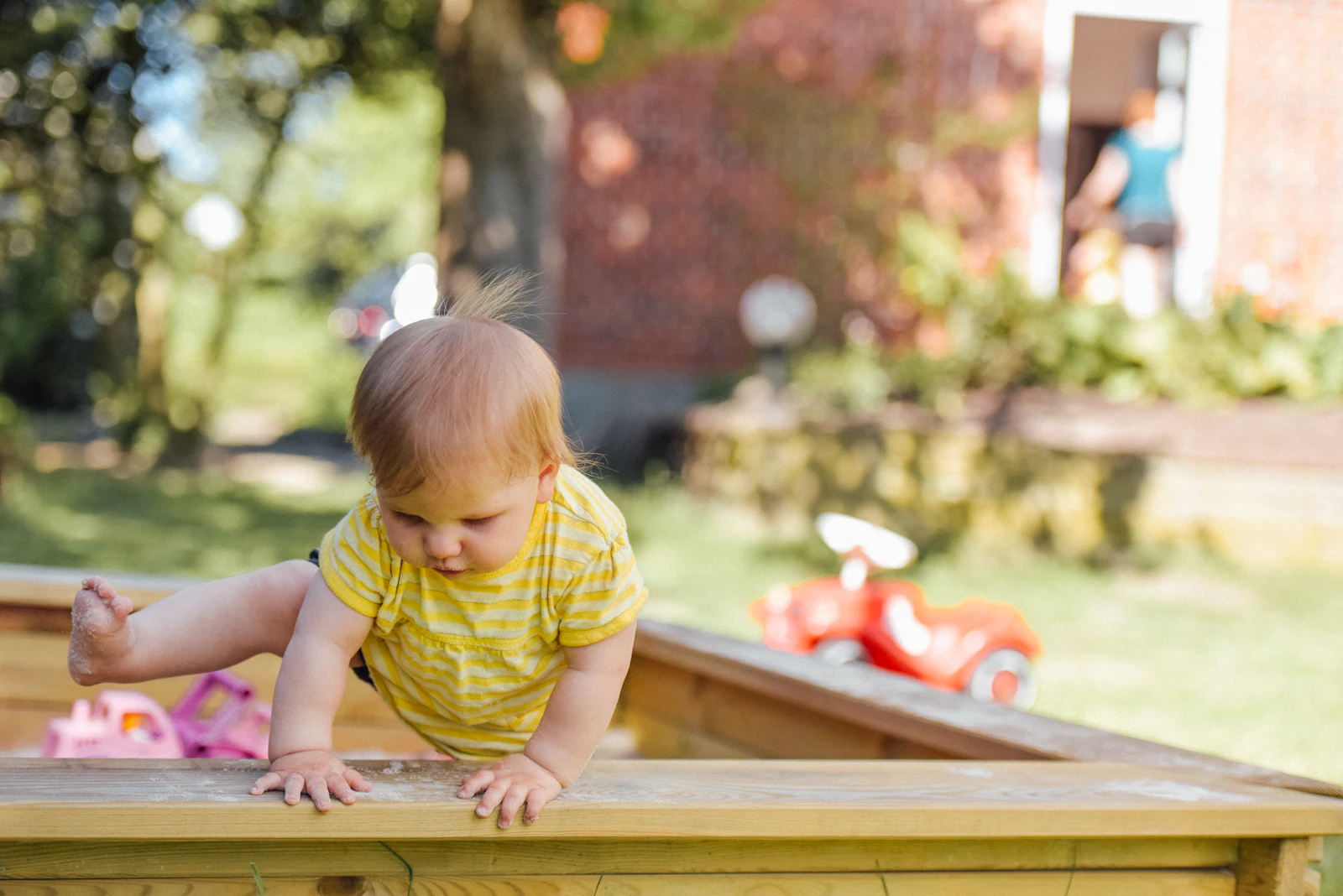
A baby pulling up on the side of a crib

Safety

Childproofing, room by room

Babies go from staying put to into everything faster than you expect. Get down to their eye level and work through this list before they start rolling and crawling.

Photo: Alexander Dummer on Unsplash

Written by the SillyBaby editorial team Checked against NHS, CDC and AAP guidance Updated Editorial standards

Childproofing kit

A few well-chosen products go a long way.

Before crawling

Stair and door gates

Top and bottom of stairs, kitchen doorway.

What to look for

  • Screw-fitted for the top of stairs
  • BS EN 1930 (UK/EU) or ASTM F1004 (US)
  • Opens one-handed for adults
From day one

Furniture and TV anchors

Stops tip-overs.

What to look for

  • Rated for the furniture’s weight
  • Fixed into a stud or with the right wall plugs
  • Check them regularly
6 m+

Cupboard and drawer locks

For cleaning products and medicines.

What to look for

  • Magnetic or adhesive locks avoid drilling
  • Adult-friendly to open
  • Still store dangerous items up high
Climbers

Window restrictors

Limit how far windows open.

What to look for

  • Can be released by an adult in a fire
  • Fitted to every upstairs window
  • Cordless blinds or cord cleats

The big hidden dangers

Button batteries

Can cause serious internal burns within hours if swallowed. Keep devices’ battery covers taped or screwed shut; get help immediately if one may have been swallowed.

Furniture and TV tip-overs

Anchor chests of drawers, bookcases and TVs to the wall.

Blind and curtain cords

Keep cords and chains short and out of reach, or use cordless blinds. Move cots away from windows.

Hot drinks

Never hold a hot drink while holding a baby, and keep mugs well back from edges.

Water

Babies can drown quickly and silently in very little water. Stay within arm’s reach at bath time.

Medicines and laundry capsules

Store up high and locked away; they can look like sweets.

Room by room

Stairs and hallways

  • Stair gates at the top and bottom (screw-fitted at the top).
  • Keep stairs clear of clutter.

Kitchen

  • Use back hobs, turn pan handles inwards and keep children out while cooking.
  • Cupboard locks on cleaning products, dishwasher tablets and sharp items.
  • Keep kettle flexes short and at the back.

Living room

  • Anchor TVs and furniture; cover sharp corners if needed.
  • Fireguards fixed to the wall.
  • Keep small objects, magnets, batteries and coins off the floor and low surfaces.

Bathroom

  • Never leave a baby or young child alone in the bath, even for a moment. Bath seats are not safety devices.
  • Run cold water first, then hot; aim for about 37–38°C. In the US, the AAP suggests setting water heaters to 120°F (49°C) or lower.
  • Lock away medicines, razors and toiletries.

Bedrooms

  • Window restrictors on upstairs windows; keep furniture children could climb away from windows.
  • Cot away from windows, cords and heaters.

Garden and outside

  • Empty paddling pools after use and cover or fence ponds.
  • Lock away garden chemicals and tools.

Emergency numbers to keep handy

Save these in your phone and on the fridge: 999 and NHS 111 (UK), 911 and Poison Control 1-800-222-1222 (US), 112 (EU). If your child swallows something harmful, call for advice straight away and take the packet with you.

Last updated: 18 November 2026

Frequently asked questions

When should I start childproofing?
Before your baby starts rolling and crawling, often by around 4 to 6 months. Some things, like anchoring furniture, keeping cords away from the cot and safe storage of medicines and button batteries, are worth doing before your baby arrives.
What should I do if my child swallows a button battery?
Treat it as an emergency: go to A&E or call 999 (UK), 911 or Poison Control (US) straight away, even if your child seems fine. Don’t make them sick.

What can we help with today?