6 m+
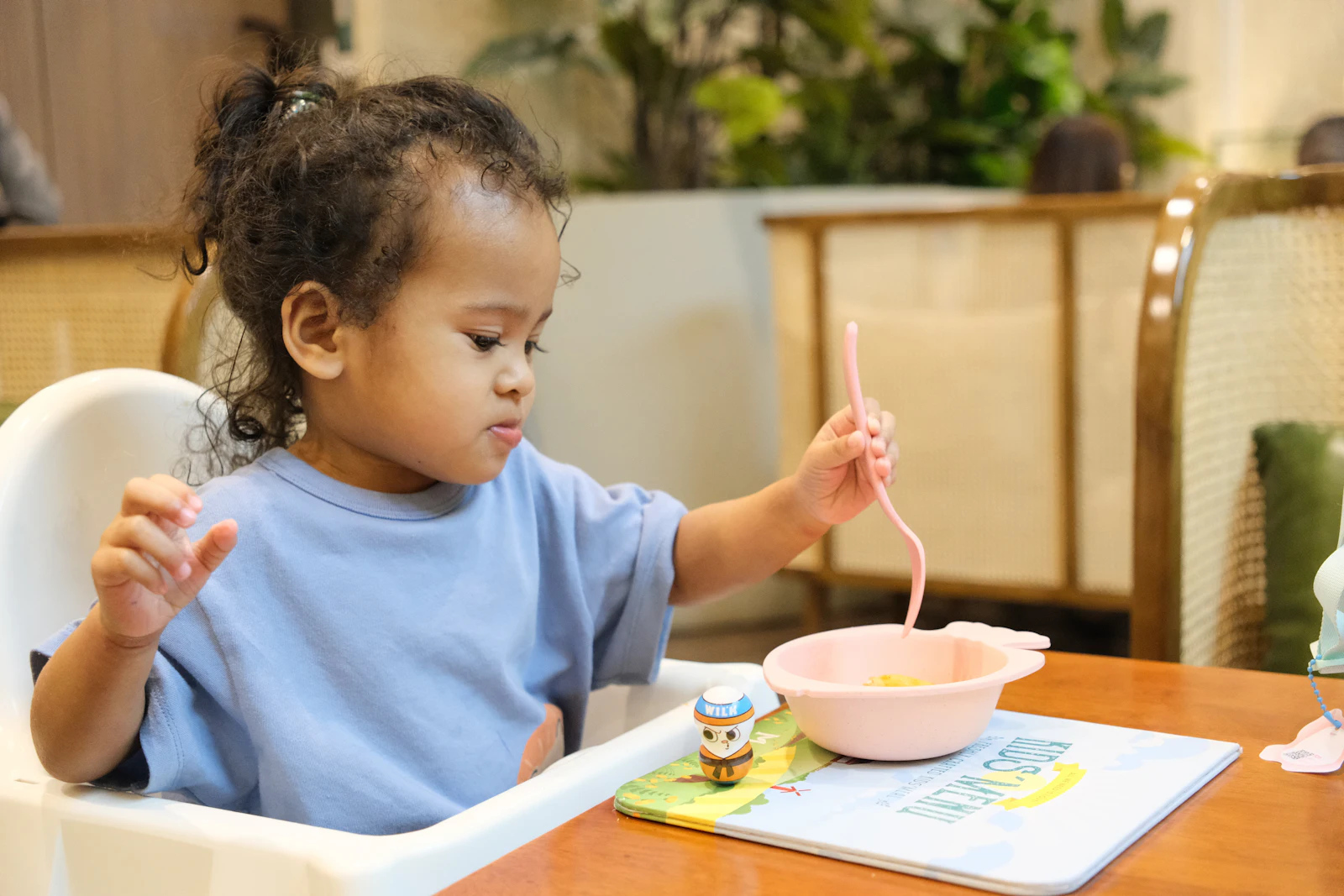
High chair
Upright, stable and harnessed.
What to look for
- Five-point harness and stable base
- Footrest helps babies sit and chew well
- Meets EN 14988 (UK/EU) or ASTM F404 (US)
SillyBaby is free to use. Some links on this site are affiliate links: if you buy or sign up through them, we may earn a commission at no extra cost to you. How we make money
Feeding · around 6 months
Squished banana on the ceiling? Welcome to weaning. Here is when to start, what to offer and how to keep mealtimes safe and fun.
Simple is best. Your baby needs a safe seat, a few spoons and a lot of bibs.
Upright, stable and harnessed.
What to look for
Sips of water with meals.
What to look for
Messy is good!
What to look for
The NHS and CDC suggest starting at around 6 months, when your baby shows all three signs:
They can stay in a sitting position and hold their head steady.
They can look at food, pick it up and put it in their mouth by themselves.
They swallow food rather than pushing most of it back out with their tongue.
Waking at night, chewing fists or wanting extra milk are normal baby behaviours, not signs of readiness. The NHS advises not starting before 17 weeks; talk to your health visitor or paediatrician if your baby was premature.
You can start with smooth or mashed foods on a spoon, soft finger foods (sometimes called baby-led weaning), or a mix of both. What matters is moving on to mashed, lumpy and finger foods so your baby learns to chew and self-feed. First foods can be single vegetables and fruits, then soon foods with iron such as meat, fish, eggs, beans, lentils and fortified cereals.
From around 6 months you can introduce foods that commonly cause allergies, one at a time and in small amounts, so you can spot any reaction: cows' milk (in cooking), eggs (UK: eggs with the British Lion stamp can be served soft), wheat, nuts and peanuts (smooth butter or ground, never whole), seeds, soya, fish and shellfish. Once introduced, keep offering them regularly.
If your baby has severe eczema or a known food allergy, talk to your GP or paediatrician before introducing peanut or egg. US guidelines (NIAID) support early peanut introduction for higher-risk babies, with medical guidance. Call 999 / 911 if your baby has swelling of the face or lips, trouble breathing or collapses after eating.
Gagging is a normal, noisy reflex as babies learn to move food around their mouths. Choking is usually silent: the airway is blocked and the baby can't cough, cry or breathe. Always supervise meals with your baby sitting upright, and learn baby first aid.
Last updated: 18 November 2026


