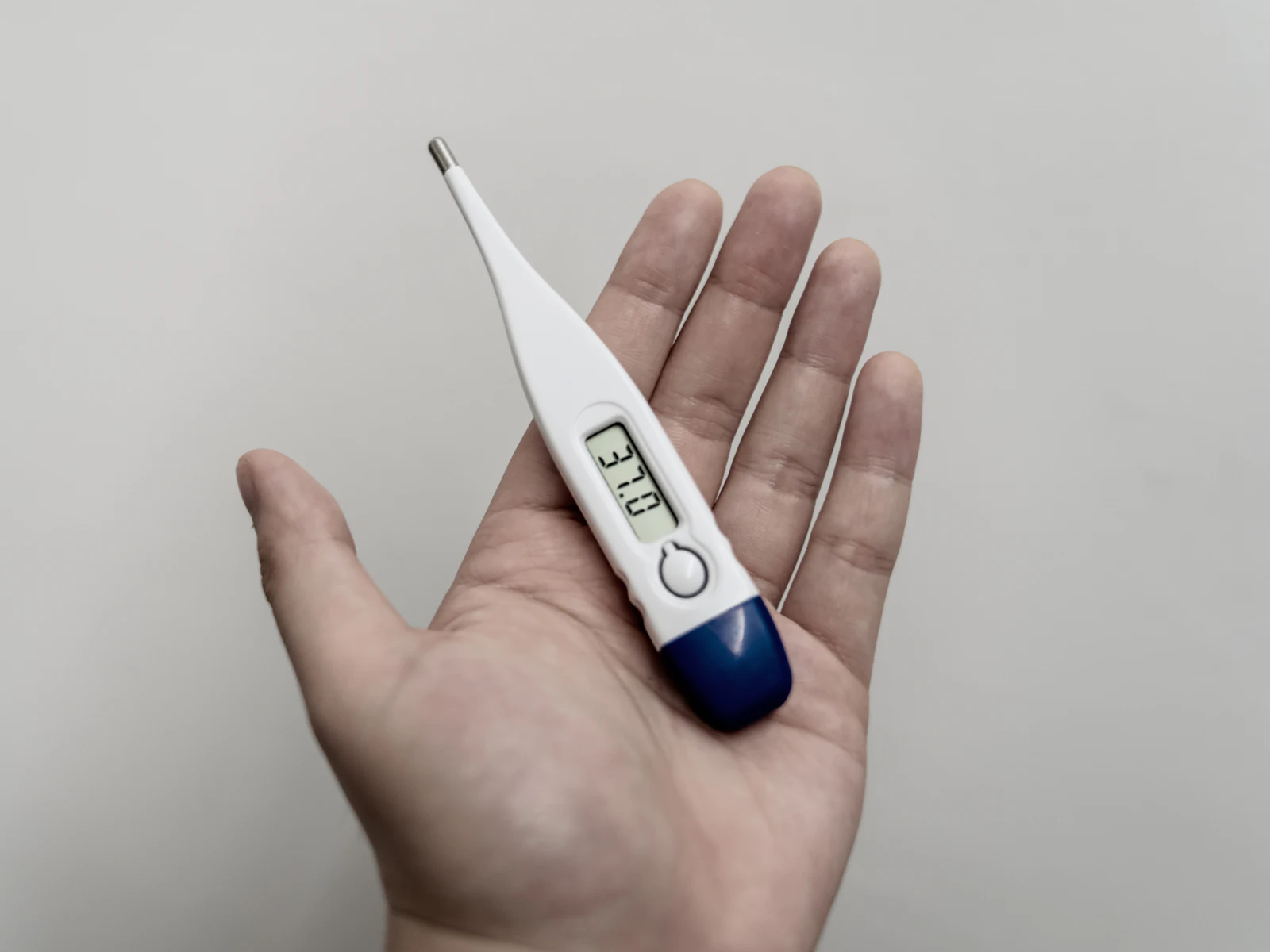
What counts as a high temperature?
The NHS defines a high temperature in children as 38°C (100.4°F) or above. The AAP uses the same 100.4°F (38°C) threshold for babies.
| Age | Temperature | What to do |
|---|---|---|
| Under 3 months | 38°C (100.4°F) or higher | Get urgent medical advice: call your GP or NHS 111 (UK) or your paediatrician (US) straight away. |
| 3 to 6 months | 39°C (102.2°F) or higher | Get urgent medical advice (NHS). |
| Any age | High temperature with warning signs below | Call 999 / 911 / 112. |
| Older babies and children | High temperature, otherwise coping | Fluids, rest, light clothing; get advice if it lasts over 5 days, they’re getting worse or you’re worried. |
Call 999 (UK), 911 (US) or 112 (EU) if your child
- has a stiff neck, or a rash that doesn't fade when you press a glass against it,
- is bothered by light,
- has a fit (seizure) for the first time, or one that lasts more than 5 minutes,
- has unusually cold hands and feet with a high temperature,
- has blue, grey, pale or blotchy skin, lips or tongue,
- is floppy, unusually sleepy or hard to wake,
- finds it hard to breathe, is grunting or their tummy sucks in under the ribs,
- has a weak, high-pitched or continuous cry, or isn't responding as normal.
How to take a temperature
Use a digital thermometer. For babies under 5 the NHS recommends an under-the-arm (armpit) reading with a digital thermometer; ear (tympanic) thermometers are another option for older children. In the US, the AAP says a rectal reading is the most accurate for babies under 3 months; ask your paediatrician how to do it. Strip-type forehead thermometers aren't reliable.
Looking after a child with a fever
- Fluids: offer plenty of drinks (breast milk or formula for babies). Watch for dehydration: fewer wet nappies, dry mouth, no tears, sunken soft spot.
- Comfort: light clothing, a comfortable room. Don't undress them fully or sponge them with cold water.
- Medicine: you can give paracetamol (acetaminophen) or ibuprofen if your child is distressed, following the dose on the pack for their age or weight. NHS: paracetamol from 2 months, ibuprofen from 3 months (if they weigh over 5kg). Don't give both at the same time, and ask a pharmacist before alternating. Never give aspirin to under-16s.
- Check at night and keep them off nursery or school while unwell.
After vaccinations, a raised temperature is common. Ask your GP or nurse about paracetamol advice for your baby's vaccines.
Febrile seizures
Some young children (usually between 6 months and 3 years) have a fit when they have a high temperature, called a febrile seizure. They can be frightening but are usually not harmful. Keep your child safe on their side, time it, and call 999 / 911 if it's their first fit, it lasts more than 5 minutes, or they don't recover quickly.
Last updated: 18 November 2026


